From 0 → 1: AIoT + Digital Twins deployment
Translate abstract requirements into executable systems, combining Digital Twin models with real-time monitoring, simulation, and decision support across DCIM, smart factory, and iMVP scenarios.
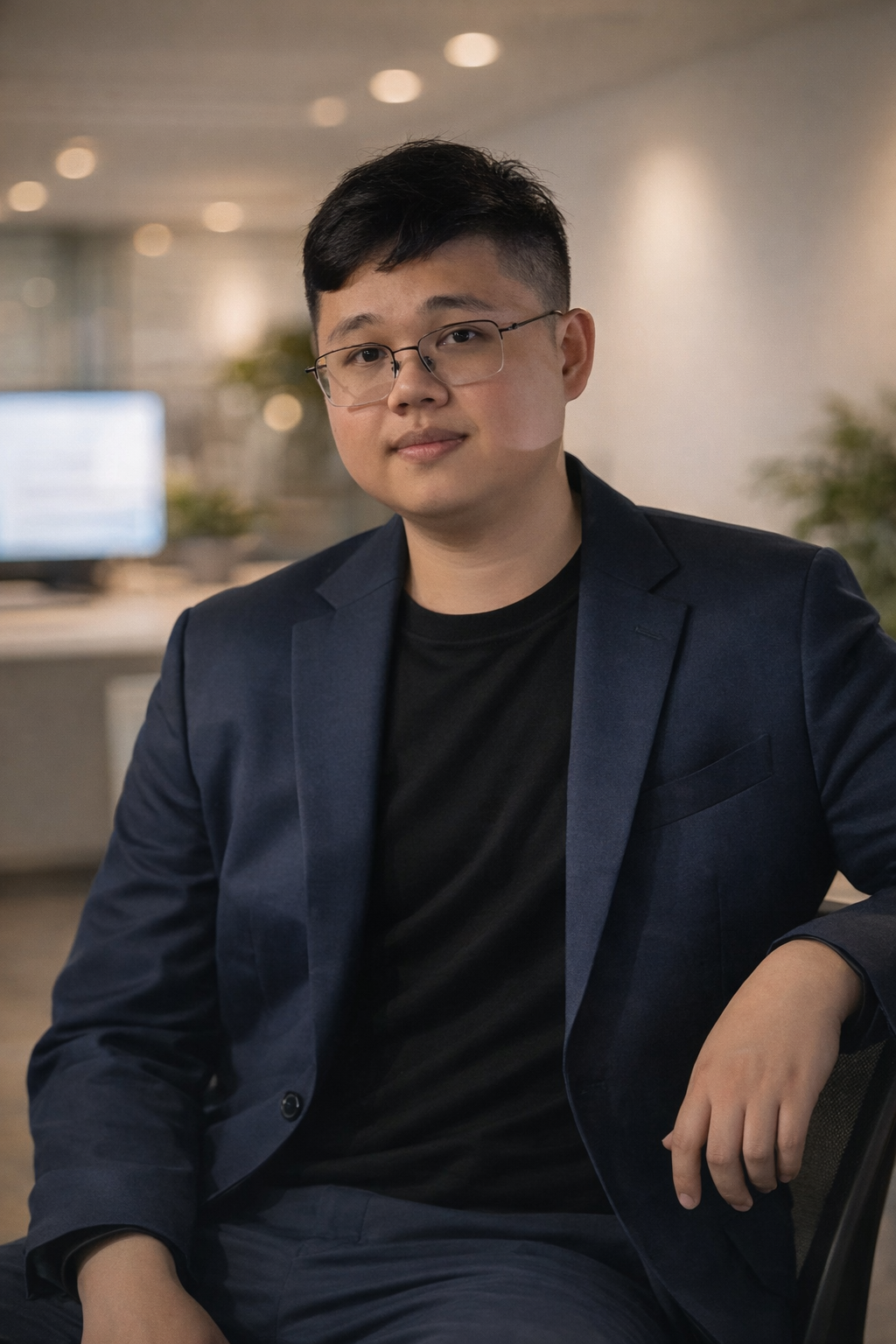
Vasiliy Chen — AIoT & Digital Twins Solution Architect
From concept to real-world deployment.
I am not just a software engineer. I work as an end-to-end solution architect focused on AIoT and Digital Twins, translating abstract requirements into deployable systems, reusable platforms, and commercially viable operating models.
Core Value
These six dimensions define the difference between shipping code and building a real solution architecture that can survive operations, growth, and commercial pressure.
Translate abstract requirements into executable systems, combining Digital Twin models with real-time monitoring, simulation, and decision support across DCIM, smart factory, and iMVP scenarios.
I do not design systems for demos. I design products from user flow, business logic, and operational usability so the technology can actually be adopted.
Build reusable cores across IoT Connector, Event / Alarm, Notification, Streaming, and DCIM so one implementation can scale across multiple projects.
Connect field devices, gateways, remote access, private networks, and cloud platforms into one deployable AIoT operating system.
Own AIoT data pipelines, event-driven architecture, high-availability design, and cross-system integration so the platform stays maintainable and expandable.
Architecture and stack choices directly shape cost, extensibility, team leverage, and business model, not just implementation detail.
Live Prototype
This is not a static portfolio screenshot. It is a live Digital Twin Concept Lab with smart building campus views, data center DCIM scenarios, 3D GIS, simulated telemetry, and an agent console in one lightweight web prototype.
Product Mindset
I design products that can be understood, operated, and deployed. That means aligning system design with PM, business, workflow, and operational realities from the start.
Capability Map
My work is not tied to one stack. I connect industry context, platform architecture, and operating logic into a coherent solution.
Integration & Gateway
The hard part of AIoT is not writing one service. It is connecting devices, gateways, remote connectivity, and OT / IT workflows into a system that actually runs in the field.
Platform Modules
A platform is not a feature list. It is a network of reusable modules that can be composed, observed, extended, and re-applied.
Architecture
I care about the whole system: AIoT data pipelines, event-driven design, availability, and how multiple systems connect and evolve over time.
Experience
AI leasing and asset management, contracts, billing, workflow automation, smart lock and meter integration, plus AI-agent-assisted management and decision support.
Built Digital Twin platforms for DCIM and smart factory use cases, combining IoT integration with visual operations and decision support.
Node.js microservices, Kubernetes / Docker deployments at 200+ containers, and high-concurrency APIs with complex system integrations.
Impact
Integrated contracts, billing, workflow automation, smart locks, and energy meters into a PropTech operating platform.
PropTech PlatformConnected factory data, live visualization, and decision workflows so Digital Twin models became operational tools.
Digital Twin DeploymentHandled device connectivity, platform integration, and signal governance so IoT became a platform capability instead of isolated hardware.
IoT IntegrationCombined alarms, media, spatial data, and control workflows into an operable infrastructure platform.
Control PlatformAn operable showcase for smart building campus views, data centers, 3D GIS, scenario simulation, and agent-assisted analysis.
Operable ShowcaseOpen workBrought Twin visualization, data flow, and reusable modules into a platform that could scale beyond PoC stage.
Reusable Twin PlatformPrinciples
“Technology must land in the real world and create business value”
“Systems should grow from projects into platforms, not stop at one delivery”
“AIoT is fundamentally about data loops and decisions, not device counts”
“Technical choices directly shape cost, scalability, and business models”
Contact
If you are shaping a smart factory, smart building, PropTech, AIoT platform, or Digital Twin initiative, I can help turn the idea into a deployable architecture and product path.
If you want to discuss collaboration, architecture planning, or solution design, LinkedIn is now the direct contact channel.
For teams shaping scenarios, product direction, and the system blueprint.
For AIoT, Digital Twins, OT / IT integration, and platform architecture calibration.
For turning one delivery into an extensible, operable, and commercially useful platform.